Check in three steps
Three questions show whether § 56 GModG applies to your building:
Is your building affected?
§ 56 only applies to non-residential buildings. Other rules of the GModG apply to residential buildings.
As long as the rated output of heating, air conditioning and ventilation does not exceed 70 kW, § 56 does not apply. Lighting control often pays off anyway – through lower electricity consumption alone.
What counts is the maximum output in continuous operation on the rating plate. Generators controlled as one system are added together. Your energy consultant or building services engineer can confirm this.
Discuss lighting under the GModGThe duty lapses if fitting the system is technically impossible or economically unreasonable. Have the justification confirmed by a specialist and keep it on file.
By 31 December 2029 you need a building automation system and automatic lighting control – appropriately zoned and with occupancy detection. For the lighting, we take care of design, luminaires, sensors and installation.
Discuss lighting under the GModGInitial guidance on § 56 GModG, not legal advice. As of October 2026.
What counts towards the 70 kW?
This means the rated output of the heating system, the air-conditioning system or a combined system with ventilation – the maximum heating or cooling output in continuous operation stated by the manufacturer. It is shown on the rating plate. How much energy the building actually consumes is irrelevant.
- Added together: generators that work as one system – for example two boilers in a cascade with common control.
- Not added together according to the common interpretation: separate systems, heating and separate cooling, and pure standby generators.
- Not counted: the lighting.
What is required by the end of 2029
| Area | Requirement |
|---|---|
| Building automation (§ 56 paras. 1 and 2) | A system that monitors and analyses consumption, detects efficiency losses, informs the operator about improvements, monitors indoor climate quality and provides data via an open interface |
| Lighting (§ 56 para. 6) | Automatic lighting control, appropriately zoned and with occupancy detection |
| New buildings (§ 56 para. 3) | In addition, a minimum automation class to DIN/TS 18599-11 – class C above 70 kW, class B above 290 kW – and technical commissioning management |
For building automation systems installed in the three years before 1 January 2027 that do not yet meet the requirements, paragraph 4 provides a longer deadline. This does not automatically extend the deadline for lighting control under paragraph 6.
The roadmap to 2029
- Now: Record the rated output of all heating, air-conditioning and ventilation systems and clarify whether the building is affected.
- 2027: Survey the existing installation, draw up a concept for building automation and lighting control, set a budget and check funding.
- 2028: Implementation during operation, in stages.
- 2029: Complete and document commissioning – by 31 December at the latest.
Starting only in 2029 means competing with every other owner for planners, materials and installation slots. For lighting, the best moment is the next LED retrofit anyway: if the controls are planned at the same time, nobody has to work on every luminaire a second time.
ConsultationLet's talk about your project.Lighting calculation and quotation from the manufacturer.Lighting: often the quickest part
Building automation covers heating, ventilation, air conditioning and metering – usually larger projects. Lighting control, by contrast, can easily be planned and implemented on its own and delivers immediately measurable savings.
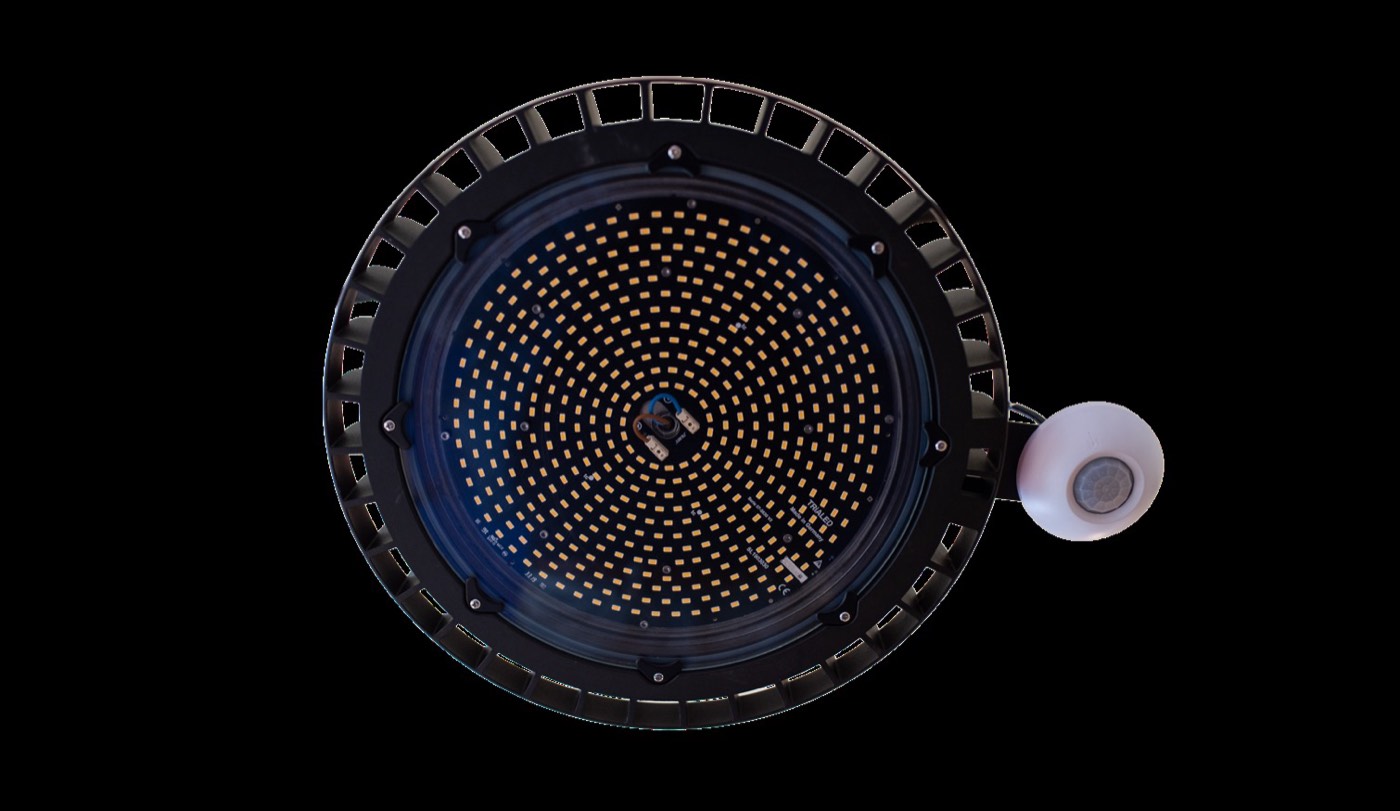
TRiALED takes care of the entire lighting part: lighting audit, lighting and sensor design, LED luminaires from our own production, sensors and light management, installation and commissioning. Owners and energy consultants have one contact for the lighting. More on the page Intelligent lighting.
Frequently asked questions
Which buildings are affected by § 56 GModG?
Non-residential buildings – buildings used wholly or mainly for purposes other than housing – whose heating, air-conditioning or combined ventilation system has a rated output of more than 70 kW. This applies to existing and new buildings.
By when must a building over 70 kW be retrofitted?
By 31 December 2029 – for building automation under § 56 para. 1 and for automatic lighting control under § 56 para. 6.
How do I determine the rated output?
From the rating plates of the heating and cooling generators. What counts is the maximum output in continuous operation stated by the manufacturer. Generators controlled as one system are added together.
Are there exemptions?
Yes, if fitting the system is technically impossible or economically unreasonable. This should be justified and documented for the individual building. Buildings used for national and alliance defence are also exempt.
What happens if I do nothing?
Failing to fit an affected building with building automation in time is a regulatory offence (§ 108 GModG). Regardless of that, the electricity costs of uncontrolled lighting continue every year.