How bright does a padel hall need to be?
The padel rules (German version 2025) require artificial lighting to comply with DIN EN 12193 “Lighting of sports facilities” and set minimum values:
| Use | Hall | Outdoor | Uniformity |
|---|---|---|---|
| Training & recreation | 300 lx | 200 lx | 0,5 |
| National & international competitions | 750 lx | 500 lx | 0,7 |
| Television broadcast | min. 1,000 lx vertical | min. 1,000 lx vertical | – |
For most leisure and club halls the training class is the benchmark. If you want to host tournaments, plan for 750 lx from the outset – or with dimmable luminaires that can do both.
Hall height and mounting height
Padel involves a lot of lobs. The rules therefore set a minimum height of 6 m from the floor to the underside of the luminaires; for new facilities 8 m is recommended if the luminaires hang above the court. Other heights are possible for luminaires outside the court walls.
Glare, glass walls and layout
- At the sides, not in the middle: Luminaires along the long sides, outside the typical ball trajectory, cause the least glare during lobs.
- Glass walls: Reflections of luminaires in the glass walls are distracting when playing off the wall. Alignment and shielding are checked in the lighting calculation.
- Corners: Because play also comes out of the corners, the light has to be uniform right up to the walls.
- Neighbouring courts: In halls with several courts, the light from one court must not dazzle the neighbouring court.
Converting an existing hall
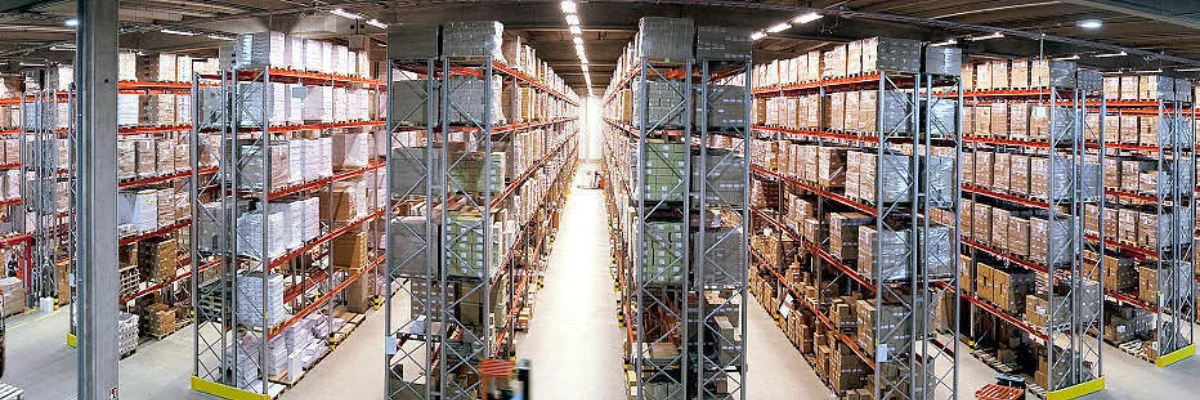
Many padel halls are created in former tennis, storage or production halls. For the lighting this is usually a manageable project: the old lighting comes down, and the new LED luminaires are suspended from the existing structure and connected.
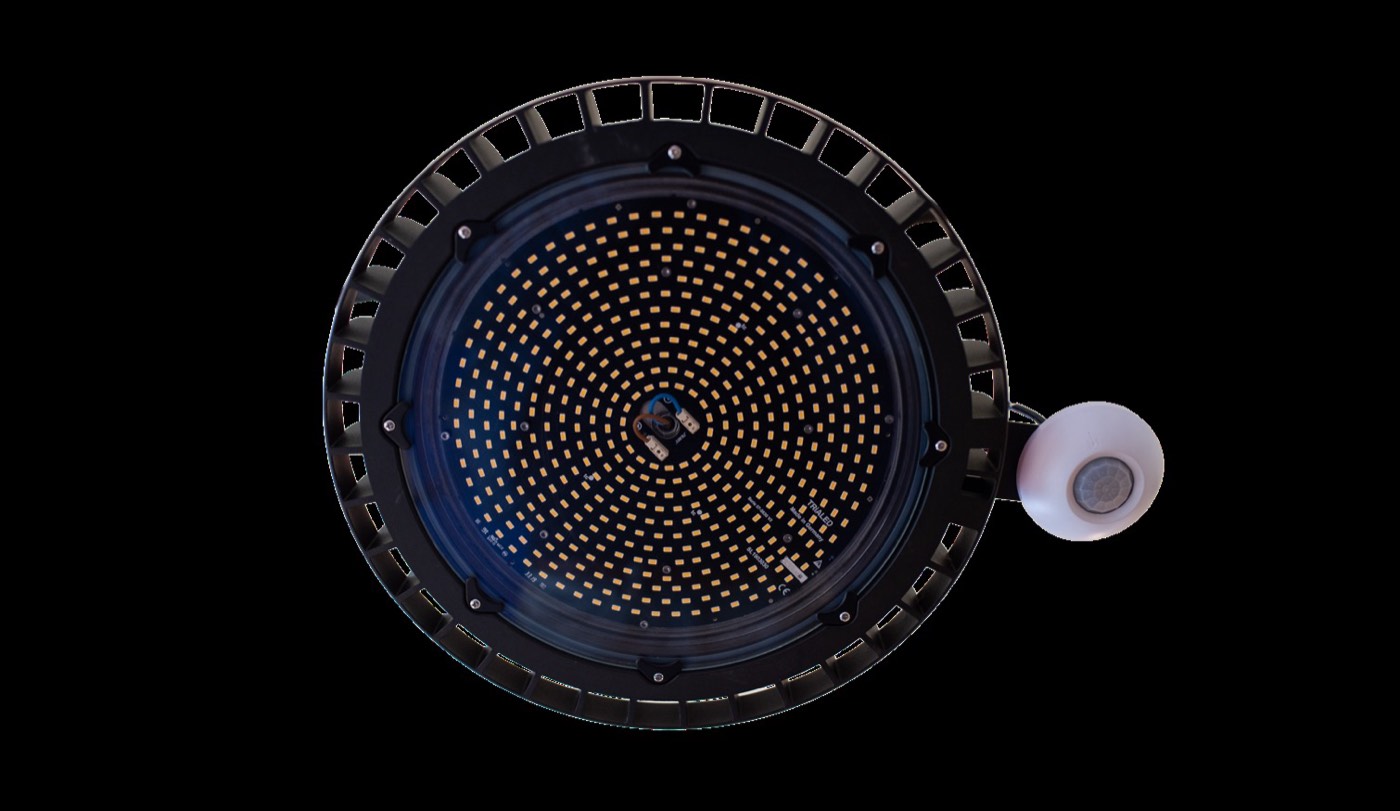
- High bay such as the Series 07 for tall halls with light points above or beside the courts.
- Linear high bay such as the Series 10 for even, linear light distribution along the courts.
- Floodlighting such as the Series 12 with 20° or 40° optics, where light is to be aimed at the court from a lateral position.
Which luminaire suits your hall and how many each court needs depends on the hall height, court layout and required class – the lighting calculation shows this. You can see how existing halls are converted in our projects in the tennis hall at Club Raffelberg and at KTHC Rot-Weiss in Cologne.
ConsultationLet's talk about your project.Lighting calculation and quotation from the manufacturer.Light per court and via the booking system
Padel halls are rented by the hour. If each court is switched individually and linked to the booking system, the lights are only on for booked games – at full brightness for tournaments and dimmed for training. That is exactly how it works at CHTC, where the floodlighting system is integrated into the booking system.
Costs and operation
Costs depend on the number of courts, the hall height, the lighting class and the controls. Because padel halls often run until late in the evening and at weekends, efficient LED technology with per-court control pays for itself quickly. An initial estimate is provided by the LED savings calculator, and you receive a quote after the free lighting consultation.
LED savings calculatorWhat can your lighting save?Energy costs, CO₂ and payback in just a few minutes.Frequently asked questions
What lighting does a padel hall need?
Under the padel rules and DIN EN 12193, at least 300 lx with a uniformity of 0.5 for training and recreation, and 750 lx at 0.7 for competitions. In addition, a glare-free layout for lobs and as little reflection as possible in the glass walls.
How high does a padel hall need to be for the lighting?
The luminaires must hang at least 6 m above the floor, measured to their lower edge. For new installations, 8 m is recommended if the luminaires are mounted above the court.
Which luminaires are suitable for a padel hall?
Depending on hall height and layout, LED high bays, linear high bays or floodlights with narrow optics. The lighting calculation shows which luminaire fits and how many are needed per court.
Can an old hall be converted into a padel hall?
Yes, that is the most common route. For the lighting this usually means: remove the old luminaires, suspend the new LED luminaires and connect them. What matters is a clear height of at least 6 m.
Which supplier provides LED lighting for padel halls?
TRiALED designs and supplies LED lighting for padel and indoor tennis halls from its own production in Germany – with a lighting calculation to DIN EN 12193 and control per court.