What is the EPBD?
EPBD stands for Energy Performance of Buildings Directive, the EU directive on the overall energy efficiency of buildings. The recast, Directive (EU) 2024/1275, entered into force on 28 May 2024. Member states had to transpose it into national law by 29 May 2026. The goal is a zero-emission building stock by 2050.
- New buildings are to be zero-emission buildings from 2030, public buildings from 2028.
- Existing buildings: Non-residential buildings follow the “worst first” principle – the worst-performing 16 % are to be improved by 2030 and the worst 26 % by 2033.
- Technology: Building automation and automatic lighting control become mandatory in larger non-residential buildings.
What the EPBD requires for lighting
Article 13(12) of the directive requires member states to set requirements for non-residential buildings to be equipped – where technically and economically feasible – with automatic lighting controls:
| Non-residential buildings with a rated output of | Deadline |
|---|---|
| more than 290 kW | 31 December 2027 |
| more than 70 kW | 31 December 2029 |
The controls must be appropriately zoned and have occupancy detection. In other words, the light responds to whether an area is actually in use – not just to a schedule or a switch at the entrance.
Building automation: the framework
Since the end of 2024, non-residential buildings with heating or air-conditioning systems above 290 kW rated output must have a building automation and control system; by the end of 2029 this applies from 70 kW (Article 13(9)). These systems must continuously monitor, log and analyse energy use, detect efficiency losses and communicate with other systems – including across manufacturers.
Lighting control that supplies consumption data and integrates with building services fits exactly into this framework.
How Germany implements the EPBD
In Germany, the Building Modernisation Act (GModG) replaces the previous Building Energy Act (GEG). The Bundestag and Bundesrat passed it in July 2026, and the first parts have applied since 29 July 2026. The building automation requirement from the former Section 71a GEG is extended to non-residential buildings from 70 kW rated output. Further parts of the transposition come into force in stages.
EPBD-ready: what it means for industrial and commercial lighting
Whether industrial hall, warehouse or office building: “EPBD-ready” means the lighting can be controlled the way the directive requires. What matters:
- Occupancy detection: Sensors detect whether an area is in use and switch or dim the light accordingly.
- Zones: Hall, rack aisle, office or corridor are controlled separately – not one switch for everything.
- Daylight-dependent control: Where daylight enters, the artificial light is reduced automatically.
- Consumption data: The control system records operating times and energy consumption, making savings verifiable.
- Dimmable drivers: Luminaires with a DALI or 1–10 V interface can be integrated into light management systems.
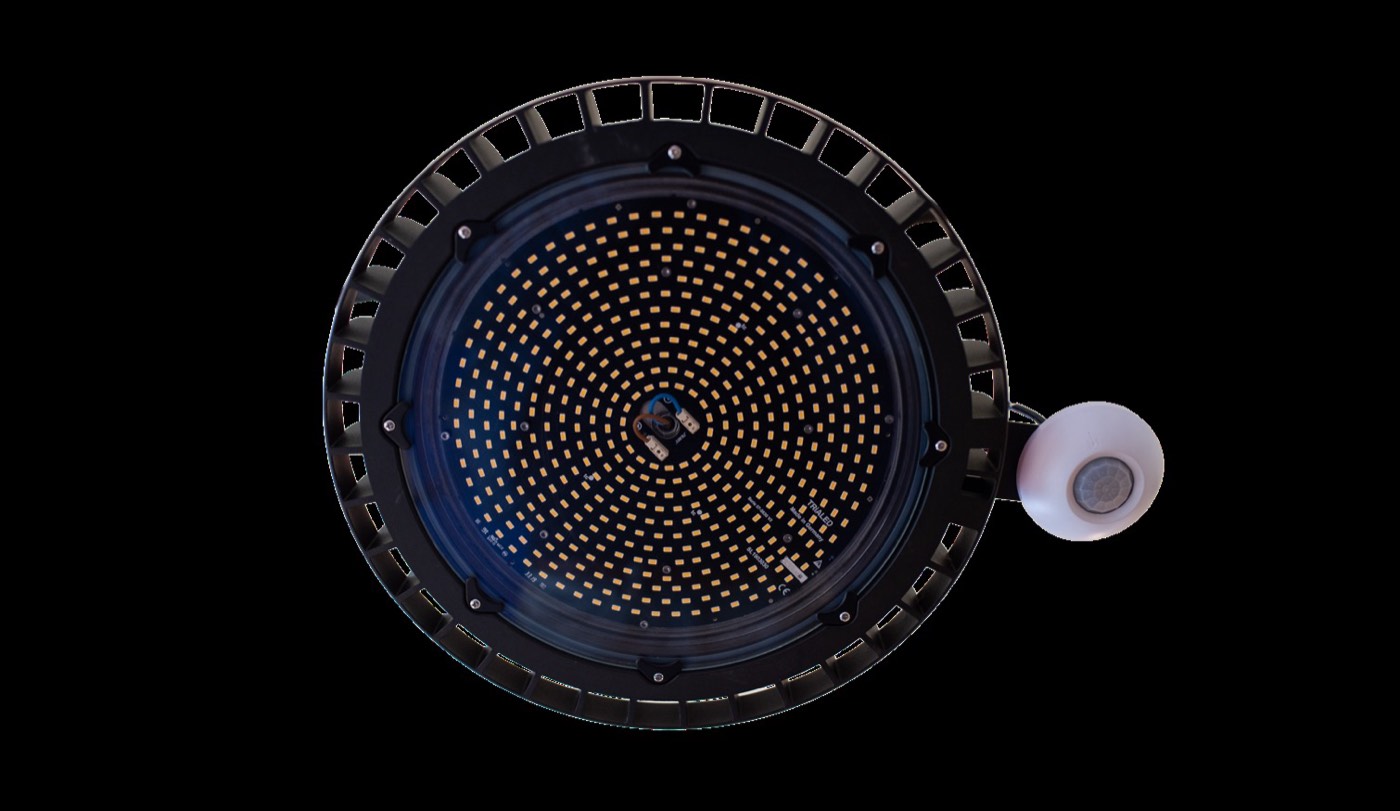
TRiALED luminaires are available in sensor-ready versions. With the light management from Autani and Keilton , the sensors sit directly on the luminaire and are networked via Bluetooth Mesh – retrofittable without new control cables. The guide explains more about the interfaces: DALI and 1–10 V.
Retrofit existing buildings instead of building new
The requirements for lighting control and building automation also apply to existing non-residential buildings. If you are retrofitting to LED anyway, plan the controls at the same time: presence and daylight control saves on top of the LED technology. In our projects lighting energy savings ranged from around 42 to 89 per cent.
ConsultationLet's talk about your project.Lighting calculation and quotation from the manufacturer.Checklist for operators
- Determine the rated output of heating and air conditioning: above 290 kW or above 70 kW?
- Check the existing lighting control: are there zones and occupancy detection?
- If an LED retrofit is coming up, plan and tender the controls at the same time.
- Pay attention to interfaces: DALI or sensors with Bluetooth Mesh, integration into building automation.
- Record energy consumption to verify savings.
- Check funding programmes before placing orders.
Frequently asked questions
What does EPBD mean?
EPBD stands for Energy Performance of Buildings Directive, the EU directive on the energy performance of buildings. The current version is Directive (EU) 2024/1275.
When does automatic lighting control become mandatory?
Under the EPBD, for non-residential buildings with more than 290 kW rated output by 31 December 2027 and with more than 70 kW by 31 December 2029 – where technically and economically feasible. National transposition is decisive.
Does the EPBD also apply to existing buildings?
Yes. The requirements for building automation and lighting control apply to non-residential buildings regardless of their age. New buildings and major renovations face further requirements.
What does EPBD-ready mean for luminaires?
The luminaires can be integrated into automatic lighting control with zones and occupancy detection – for example via sensors on the luminaire or a DALI interface.
What is the GModG?
The Building Modernisation Act (GModG) replaces the Building Energy Act (GEG) in Germany. It was passed in July 2026 and transposes the EPBD into German law in stages.