What warehouse lighting has to achieve
- Vertical illuminance: In a racking aisle the floor is not all that counts. Labels, barcodes and compartments right down to the bottom level have to be clearly recognisable.
- Safety: Industrial trucks and pedestrians share the routes. Glare-free, even light prevents accidents.
- Changing usage: Aisles are visited with different frequencies – the light should adapt.
- Temperature: Deep-freeze and unheated warehouses require luminaires for low temperatures. The Series 10 linear high bay for example is designed for −40 to +50 °C.
How bright does a warehouse have to be?
For storage areas, DIN EN 12464-1 states the following typical maintained values, among others. What applies to your project is the actual use and the current version of the standard.
| Area | Typical maintained value |
|---|---|
| Storage and stock rooms | 100 lx |
| High-bay warehouse: unmanned aisles | 20 lx |
| High-bay warehouse: manned aisles | 150 lx |
| Control stations in high-bay warehouses | 150 lx |
| Dispatch, packaging | 300 lx |
| Order picking with reading tasks | frequently 300 lx and above |
Aisle lighting: the right optic
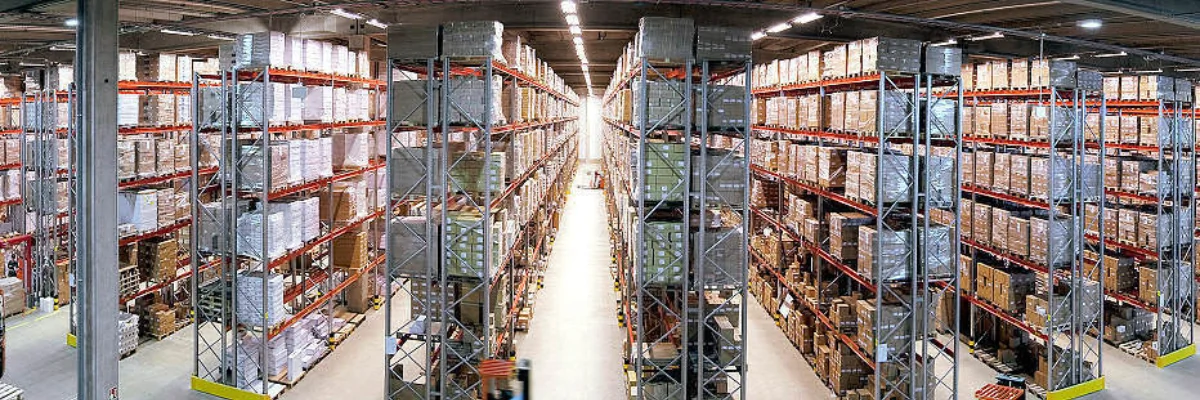
In a racking aisle, a luminaire with a wide light distribution mainly lights the tops of the racks – lower down it gets dark. Aisle optics, by contrast, focus the light along the aisle and put it onto the rack fronts.
- Mount luminaires centrally above the aisle, ideally as a continuous light line.
- Choose the optic to suit the height and width of the aisle.
- Use high-output linear high bays with very tall racking.
- Plan main traffic routes and crossings separately.
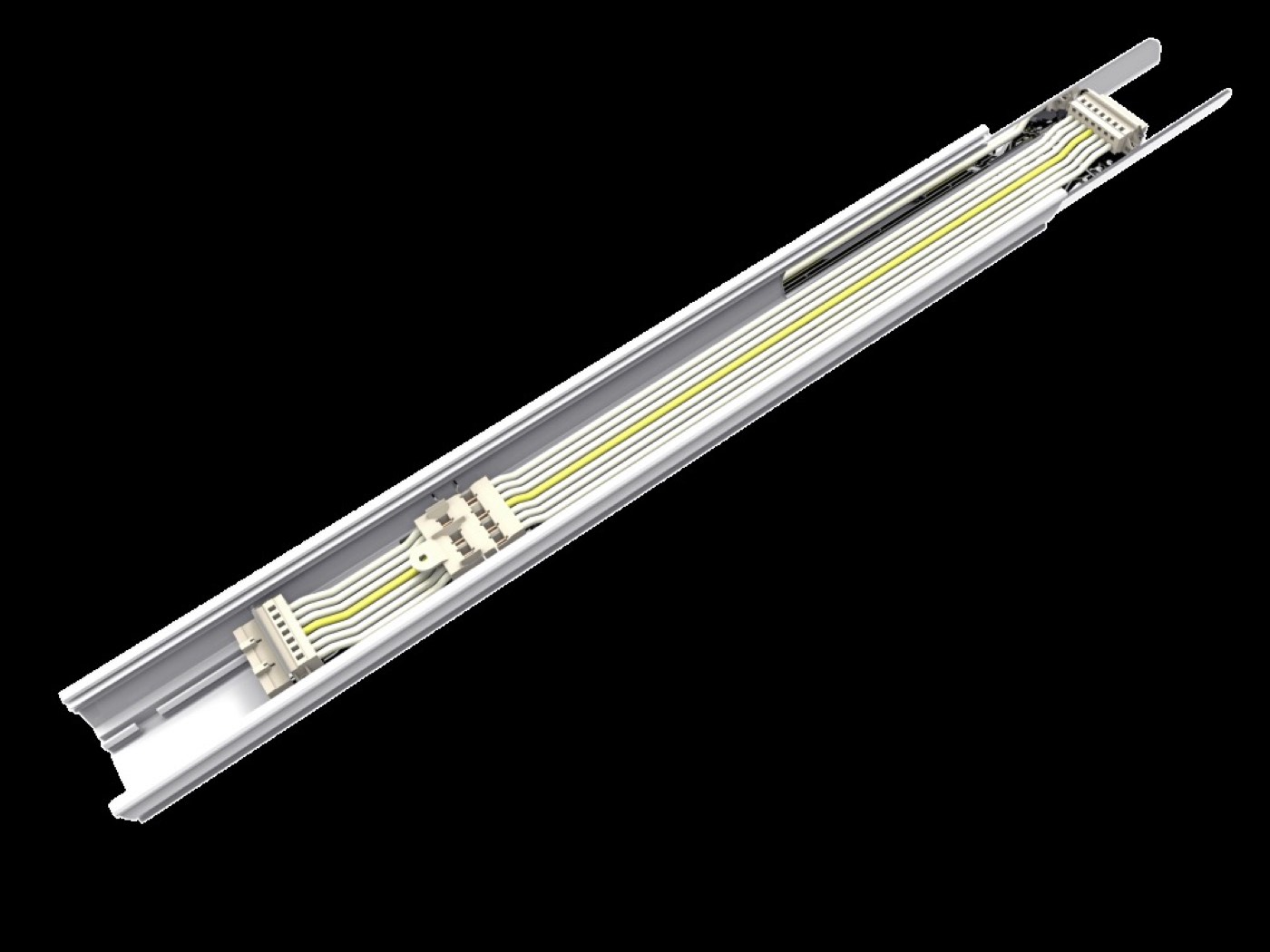
The Series 14 trunking system offers three light distributions for mounting heights from about 3 to 12 metres. For long, tall aisles the Series 10 linear high bay delivers up to 74,732 lm. We have already delivered more than 250 kilometres of Series 14 trunking.
Sensors in the warehouse: light only where work happens
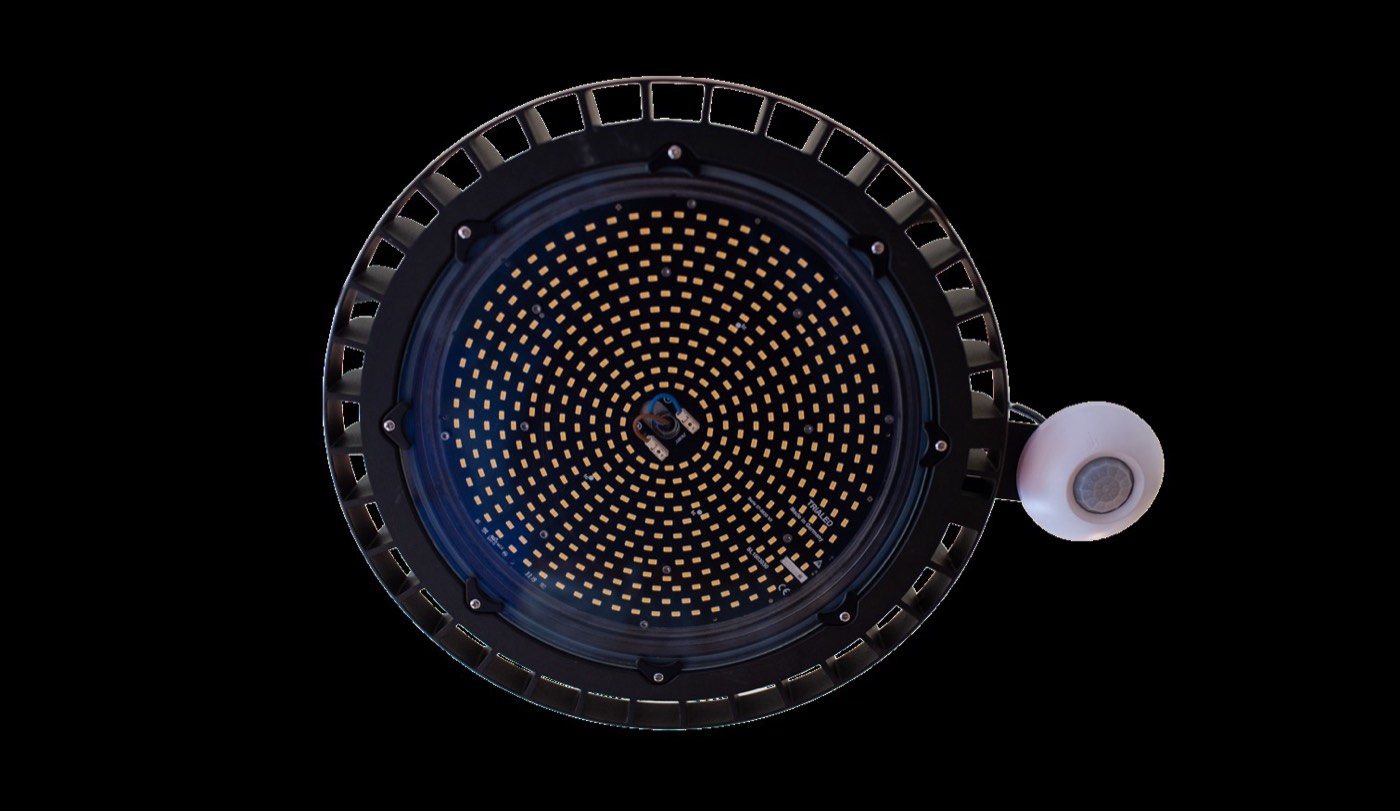
In many warehouses most aisles are empty at any given moment. Presence detectors switch the light off there, or dim it to a base level and raise it as soon as a forklift or a person enters the aisle.
The animation on our page warehouse lightingshows how this works. At the manufacturer of storage and office supplies the LED retrofit saved 56 %, and presence, time and daylight control reduced the remaining consumption further.
Experience the sensorsLight only where someone is.The interactive simulation shows how presence detectors work.Costs and cost-effectiveness
Warehouses often run in shift operation, so the lighting is on for long periods. An LED retrofit therefore often pays off particularly quickly here – at the manufacturer of storage supplies, for example, in 23 months.
The main cost factors are the number and length of the aisles, mounting height, working during operation and the controls required. A first estimate is provided by the LED savings calculator.
LED savings calculatorWhat can your lighting save?Energy costs, CO₂ and payback in just a few minutes.Cold stores and deep-freeze warehouses
LEDs like the cold: low ambient temperatures generally extend their service life. What matters, though, are drivers, seals and materials designed for the temperature range. Condensation when moving between the chilled zone and the surroundings calls for a suitable protection rating. More on this in the guide IP ratings.
Frequently asked questions
How many lux does a warehouse need?
For storage rooms DIN EN 12464-1 typically states 100 lx, 150 lx for manned aisles in high-bay warehouses and 300 lx for dispatch and packaging.
Which luminaires suit racking aisles?
Trunking systems and linear high bays with aisle optics that direct the light along the aisle onto the rack fronts. Wide-beam luminaires mainly light the tops of the racks.
Are sensors worthwhile in a warehouse?
Usually yes, because many aisles are only used occasionally. Presence detectors switch or dim the light in empty aisles and save on top of the LED retrofit.
Do LED luminaires work in a deep-freeze warehouse?
Yes, provided the luminaire, driver and seals are designed for the temperature range. The Series 10 linear high bay, for example, is specified for −40 to +50 °C.