Which values apply?
Typical maintained values of illuminance to DIN EN 12464-1 and ASR A3.4 at a glance:
| Area | Typical maintained value | Colour rendering |
|---|---|---|
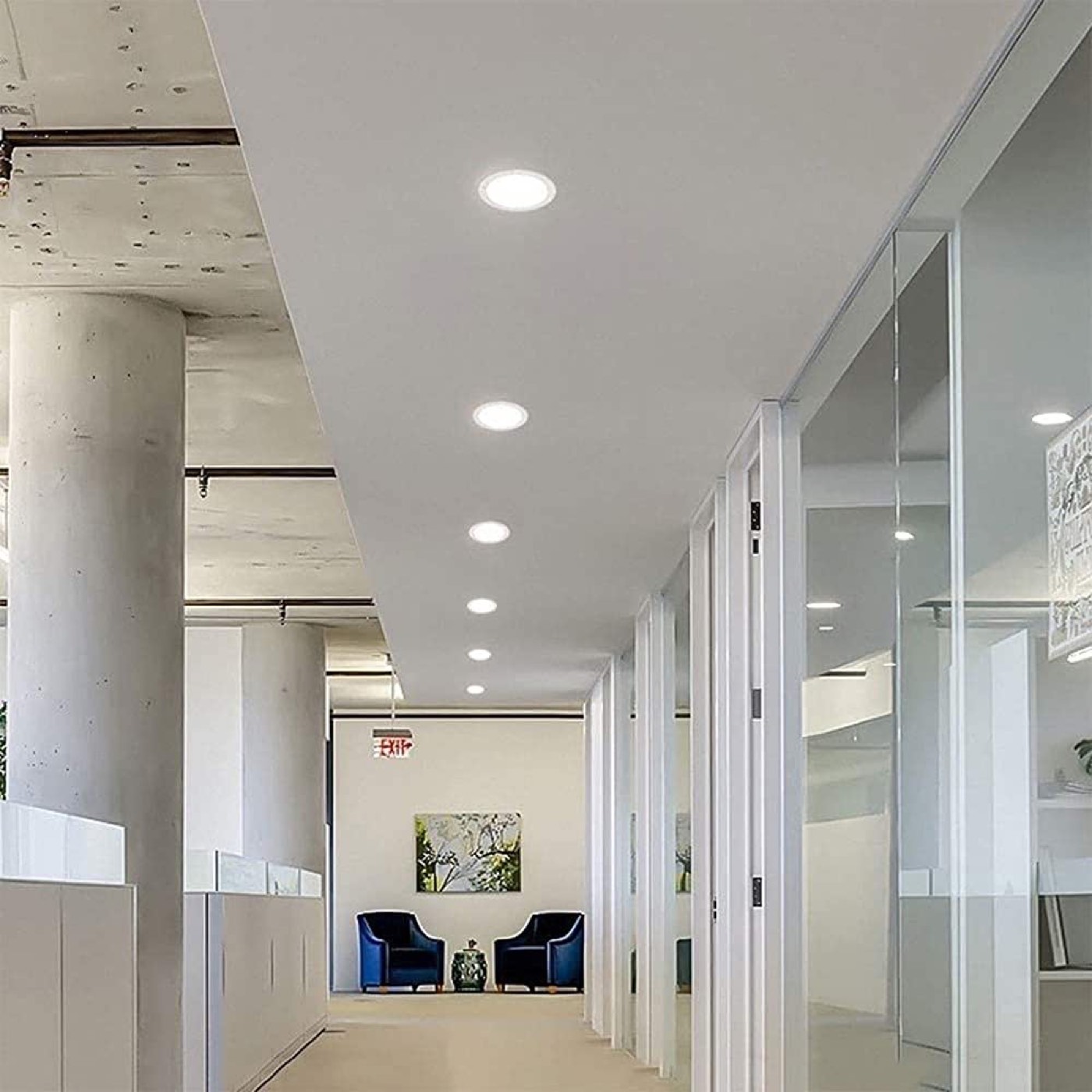
| Corridors during the day | 100 lx (DIN EN 12464-1), 200 lx (ASR A3.4) | Ra ≥ 80 |
| Patient rooms, general lighting | 100 lx | Ra ≥ 80 |
| Reading in patient rooms | 300 lx | Ra ≥ 80 |
| Examination and treatment | 1.000 lx | Ra ≥ 90 |
| Laboratories | 500 lx | Ra ≥ 90 |
| Instrument reprocessing | 500 lx | Ra ≥ 80 |
| Night-time patient monitoring | greatly reduced, e.g. 20–50 lx | Ra ≥ 90 |
The values are guide values for orientation. Your project is governed by the current versions of the standards, DIN 5035-3 for healthcare and the risk assessment.
Where LED delivers most in hospitals
- Corridors and circulation routes: Continuous operation around the clock, with presence control and night-time dimming.
- Administration and nurses' stations: Office lighting with 500 lx and UGR ≤ 19, for example with LED panels Series 11.
- Technical, storage and service areas: rugged damp-proof and trunking luminaires.
- Multi-storey car parks and outdoor areas: many operating hours, large savings potential – see Car park lighting.
- Safety lighting: Escape routes, exit signs and emergency light.
Light at night and for people in need of care
At night people need orientation without glare: dimmed corridor lighting, orientation light close to the floor and selectively switchable light for care. In care homes, sufficiently bright, evenly lit rooms help older people find their way during the day.
Safety lighting in hospitals
Hospitals and many care facilities are special buildings. Safety lighting is governed by the building permit, the fire safety concept and state law; areas used for medical purposes are additionally subject to DIN VDE 0100-710. For escape routes in corridors, stairwells and outbuildings, the battery-powered luminaires of Series 19 automatic self-tests and a digital test log via app.
ConsultationLet's talk about your project.Lighting calculation and quotation from the manufacturer.Cost-effectiveness
With 8,760 operating hours a year, an LED retrofit in corridors and general areas pays for itself particularly quickly. Presence control and night-time dimming save even more. For public and non-profit operators it is worth looking at current funding programmes. Calculate your project with the LED savings calculator .
LED savings calculatorWhat can your lighting save?Energy costs, CO₂ and payback in just a few minutes.Frequently asked questions
How many lux does a hospital corridor need?
DIN EN 12464-1 specifies 100 lx during the day, ASR A3.4 200 lx. At night the lighting is reduced considerably so that patients can sleep and still find their way.
What lighting does an examination room need?
For the examination itself, typically 1,000 lx with a colour rendering of Ra ≥ 90. Such areas need special solutions, which are agreed in the project with the medical technology team and specialist planners.
Which standard applies to hospital lighting?
DIN EN 12464-1 and ASR A3.4 for workplaces, supplemented by DIN 5035-3 for healthcare. For safety lighting, special building regulations apply, and for medically used areas DIN VDE 0100-710 as well.
Does LED pay off especially in hospitals?
Yes. Corridors and common areas are often lit around the clock. With so many operating hours, the conversion pays for itself particularly quickly.