The fluorescent tube ban: what applies?
The basis is the EU RoHS directive, which restricts mercury in electrical equipment. For most linear T5 and T8 fluorescent lamps the exemption has expired: since 24 August 2023 they may no longer be placed on the market. Compact fluorescent lamps with a plug-in base were already affected in February 2023.
Important: existing installations may continue to be operated, and lamps already in the trade may be sold off. In practice, however, replacement lamps are becoming scarcer and more expensive. Anyone planning now decides on the timing themselves – instead of having to improvise at the next failure. More on this in our announcement on the fluorescent tube ban.
Four routes from fluorescent tube to LED
| Solution | What happens | Suitable for |
|---|---|---|
| Retrofit LED tube | Replace the tube and starter, the luminaire stays unchanged | Quick changeover, luminaires with magnetic or low-loss ballasts |
| Conversion | The ballast is bypassed, the tube runs directly on mains voltage | Permanent solution, requires a qualified electrician |
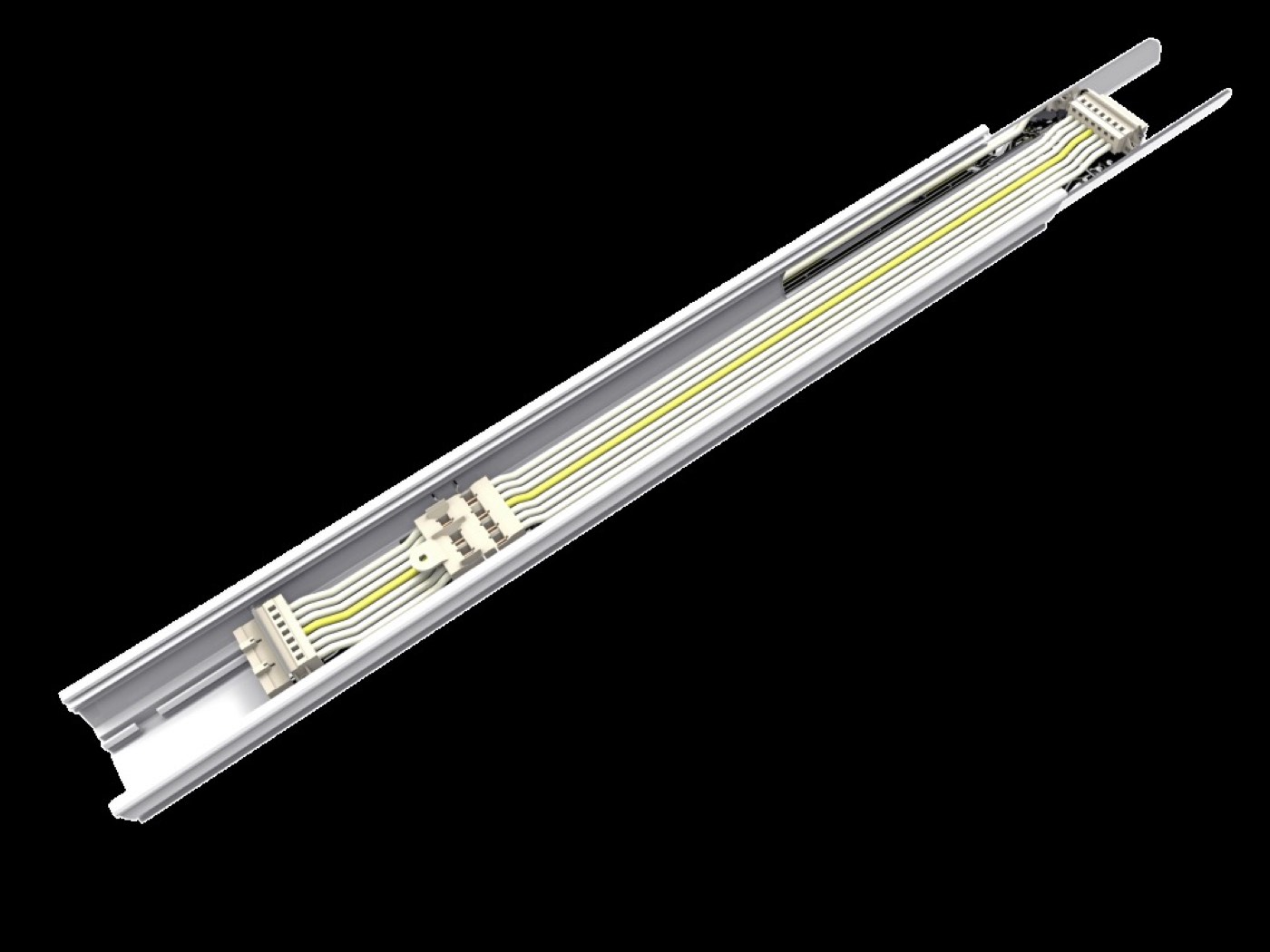
| LED module or retrofit kit | Lamp and control gear are replaced by an LED system, the housing stays | High-quality, intact fittings, e.g. ball-impact-resistant or in car parks |
| New LED luminaire | Complete replacement | Old, brittle or inefficient luminaires, new requirements |
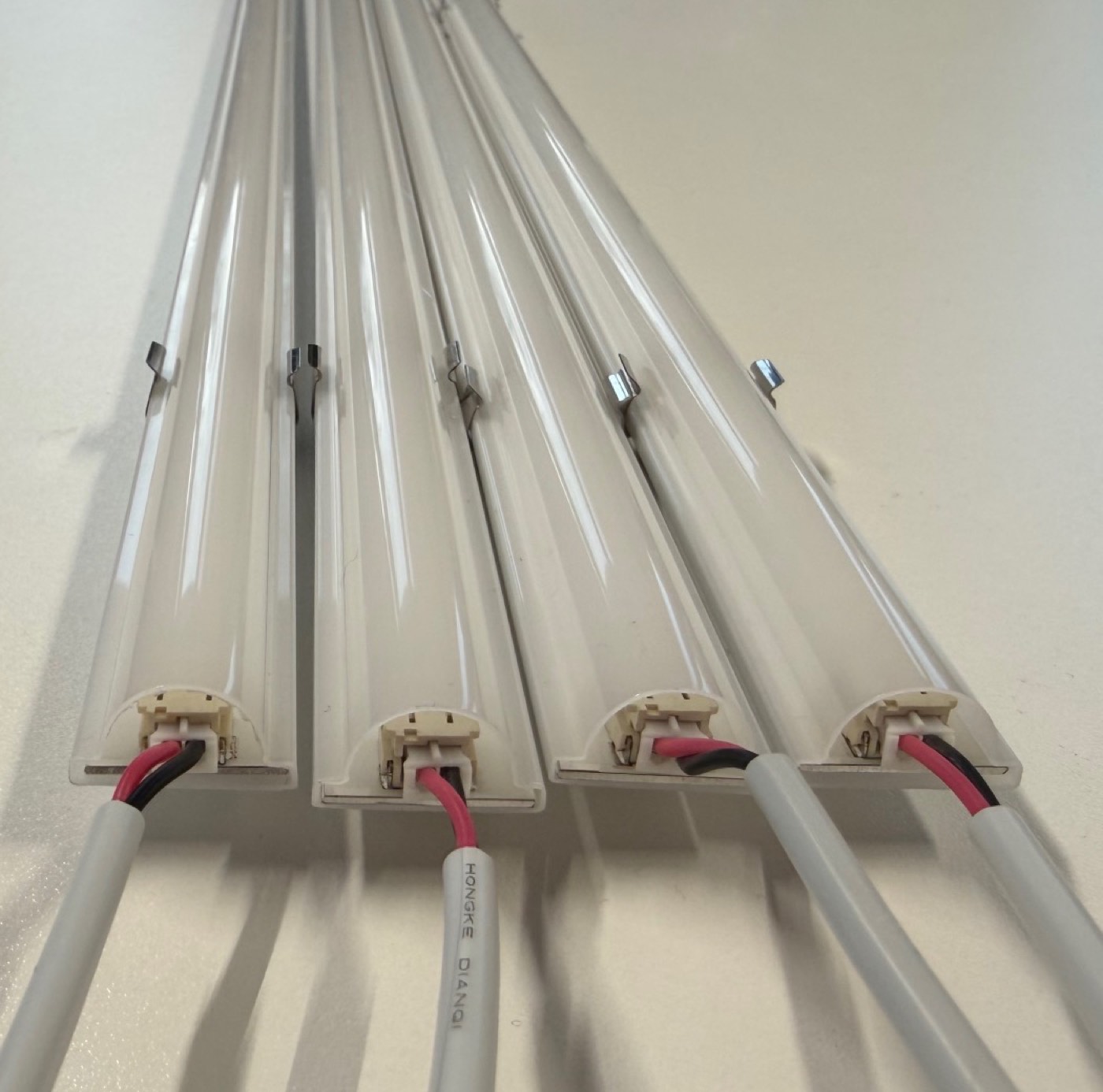
TRiALED offers a solution for every route: the Series 05 T5 LED modules and Series 08 T8 LED modules for retrofit and conversion, the Series 15 LED retrofit kit as well as complete luminaires such as the Series 14 trunking system.
Retrofit tube: fast, but with limits
With a retrofit tube for conventional or low-loss magnetic ballasts, the fluorescent tube is replaced by an LED tube and the starter by a dummy starter. The luminaire itself is not modified.
- Advantage: Very quick replacement, low cost.
- Disadvantage: The old ballast stays in the circuit and continues to use energy.
- Caution: Not every LED tube suits every ballast. Tubes for electronic ballasts are a category of their own – follow the manufacturer's data and compatibility lists.
- Light distribution: An LED tube emits light differently from a fluorescent tube. In luminaires with reflectors the light pattern can change.
Conversion and modification: who bears the responsibility?
In a conversion the ballast is removed or bypassed and the LED tube is supplied directly with mains voltage. That is more efficient, but it modifies the luminaire.
Clear labelling of the converted luminaire is important so that nobody later fits a conventional fluorescent tube by mistake.
LED modules and retrofit kits: the best of both worlds
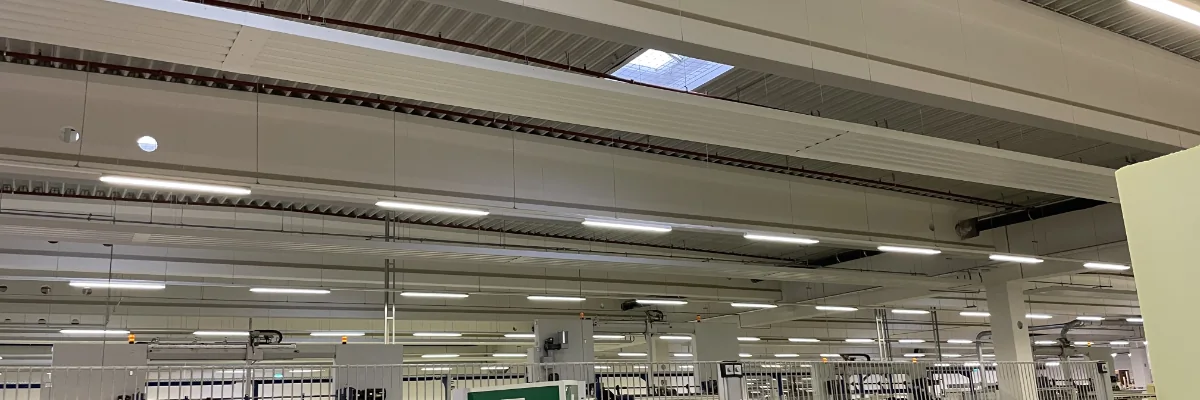
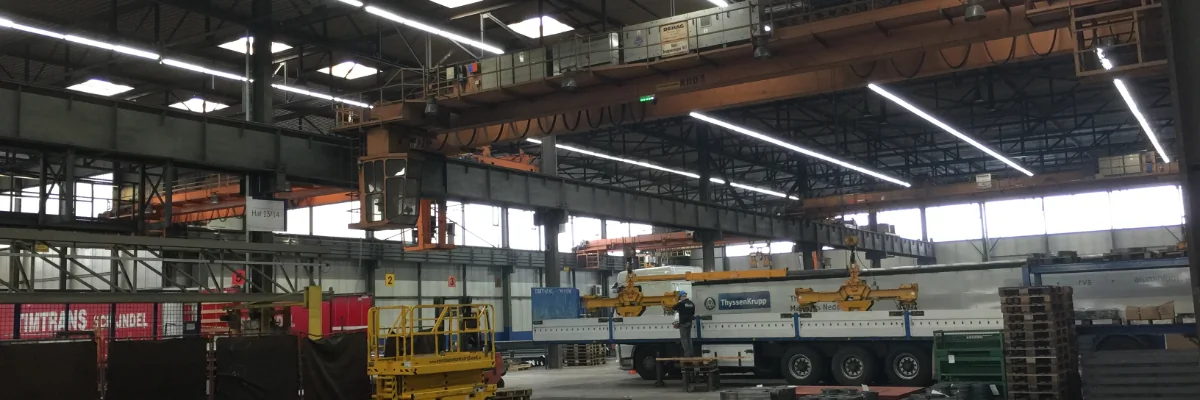
Many fittings are mechanically sound: ball-impact-resistant sports hall luminaires, weatherproof batten luminaires, recessed luminaires in modular ceilings or thousands of luminaires in car parks. Here LED modules or retrofit kits replace the old internals – the housing, mounting and often the wiring stay in place.
- Considerably less installation and disposal effort than a complete replacement
- A new, matched system of LED and driver
- On the Series 08 T8 module the output can be set from 50 to 100 %
- Drivers are external and replaceable – which extends the service life
A practical example: in a Furniture store car park 2,830 existing T8 fittings were modernised with Series 08 modules – using 68 % less lighting energy. At Club Raffelberg the ball-impact-resistant fittings were kept and the saving was 54 %.
Which solution suits you?
- Luminaires are old, yellowed or damaged: a new LED luminaire.
- Fittings are high quality and intact: an LED module or retrofit kit.
- Quick interim solution for a few luminaires: a retrofit tube.
- You want sensors or dimming: a module, retrofit kit or new luminaire with a controllable driver.
Disposing of the old tubes
Fluorescent lamps contain mercury and do not belong in household waste. They are disposed of as waste electrical equipment through collection points and take-back schemes. For larger installations, plan proper disposal from the start.
Frequently asked questions
Are fluorescent tubes banned?
Most T5 and T8 fluorescent lamps may no longer be placed on the EU market since 24 August 2023. Existing installations may continue to be operated and remaining stock may be sold.
Can I simply put an LED tube into my old luminaire?
With luminaires that have a conventional ballast this works with suitable retrofit tubes and a dummy starter. Electronic ballasts require tubes designed for them. Follow the manufacturer's compatibility information.
May I convert a luminaire to LED myself?
Anyone who modifies a luminaire generally takes on the manufacturer's responsibility for safety. Conversions should be carried out and documented by a qualified electrician.
Which is better: an LED tube or a new luminaire?
LED tubes are quick and inexpensive, but they use the old housing and often the old ballast. New luminaires or LED modules are more efficient and easier to control. The best solution depends on the condition of the luminaires.
How much does switching from T8 to LED save?
That depends on the luminaire, the ballast and the usage. In a car park project with Series 08 T8 modules the lighting energy fell by 68 %.