Why LED pays off especially in halls
Hall lighting is a classic heavy consumer: many luminaires, high wattages and long operating hours. Older installations with mercury vapour (HQL), metal halide (HQI) or fluorescent lamps use several times as much energy as modern LED luminaires for the same brightness.
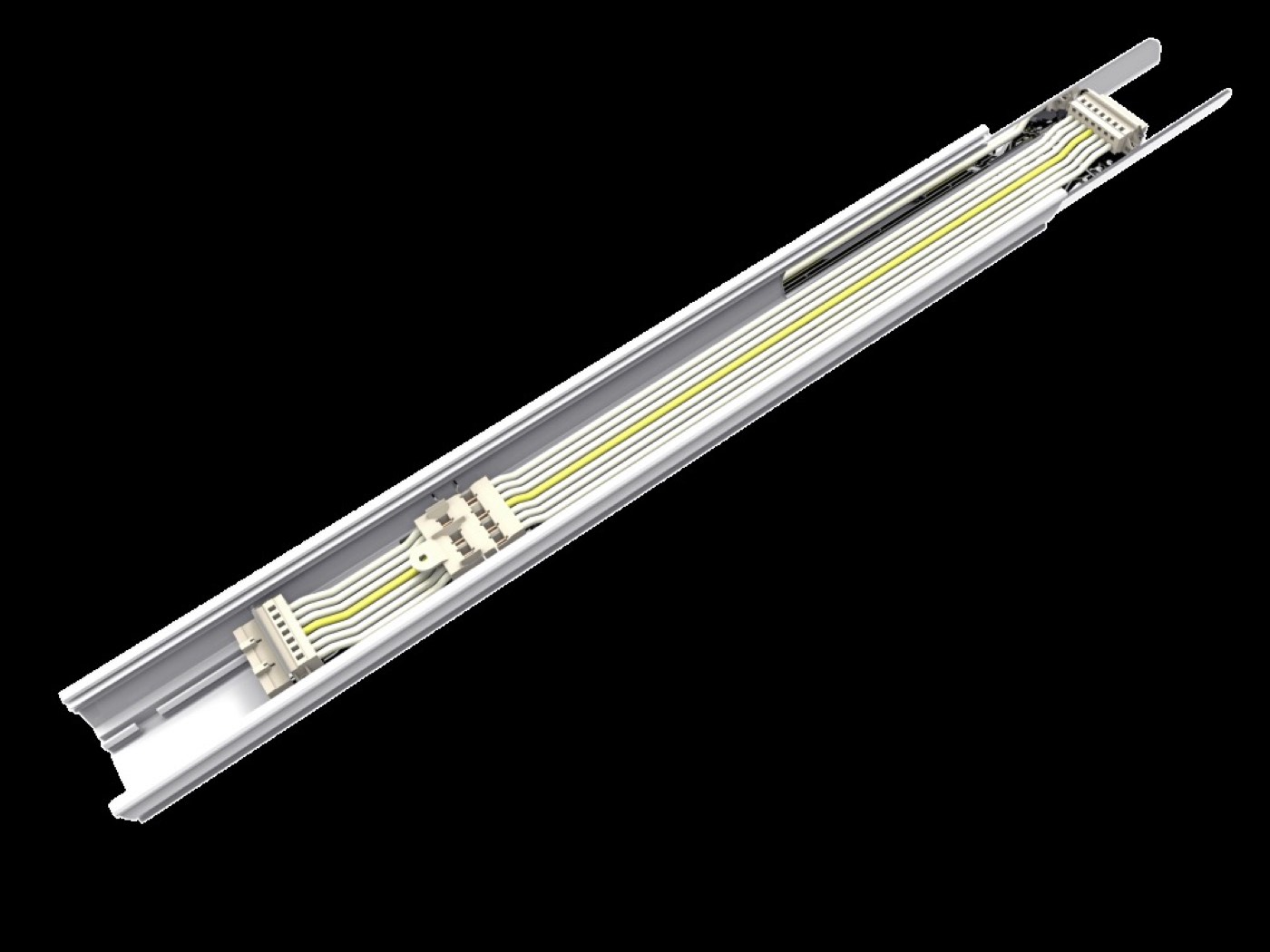
- Less energy: Modern LED hall luminaires reach high luminous efficacy – the trunking system of Series 14 for example reaches up to 157 lm/W.
- Instant full output: Unlike discharge lamps, LEDs need no warm-up time and can be switched and dimmed as often as required.
- Less maintenance: A long service life means fewer lifting platforms, closed-off areas and interruptions at height.
- Better working conditions: Even, low-flicker light with good colour rendering makes visual tasks easier and improves safety.
How large the saving turns out to be depends on the existing installation. In our projects the figures reached, for example, a total saving of 76 % at the steel merchant F. Hackländer in Kaufungen and 89 % at Carl Spaeter in Hamburg, where LED and light management were combined.
How bright does a hall have to be?
For indoor workplaces, DIN EN 12464-1 applies, supplemented in Germany by the workplace rule ASR A3.4. The standard states maintained illuminance values: this level must not be undercut even after years of operation. The values below are typical guide values for orientation – what counts for your project is the current version of the standard and the actual visual task.
| Area | Typical maintained value |
|---|---|
| Storage rooms, stock rooms | 100 lx |
| High-bay warehouse: unmanned aisles | 20 lx |
| High-bay warehouse: manned aisles | 150 lx |
| Dispatch, packaging | 300 lx |
| Rough work, e.g. assembling large parts | 300 lx |
| Medium-fine work | 500 lx |
| Fine work, e.g. inspection tasks | 750 lx and above |
Besides brightness, uniformity, glare control and colour rendering matter. In practice the installation is planned with a lighting calculation, for example in DIALux. TRiALED is a DIALux Member – the photometric data of our luminaires can be used directly in your design.
High bays or trunking?
Both designs have their strengths. What matters is mounting height, room geometry and use.
| High bay | Trunking system | |
|---|---|---|
| Typical mounting height | Tall halls, often from around 6 m | Around 3 to 12 m, depending on the optic |
| Light distribution | Point-shaped, round or wide-beam | Linear, along aisles and machine rows |
| Strengths | High output per light point, few mounting points | Very even, flexibly extendable, ideal for racking aisles |
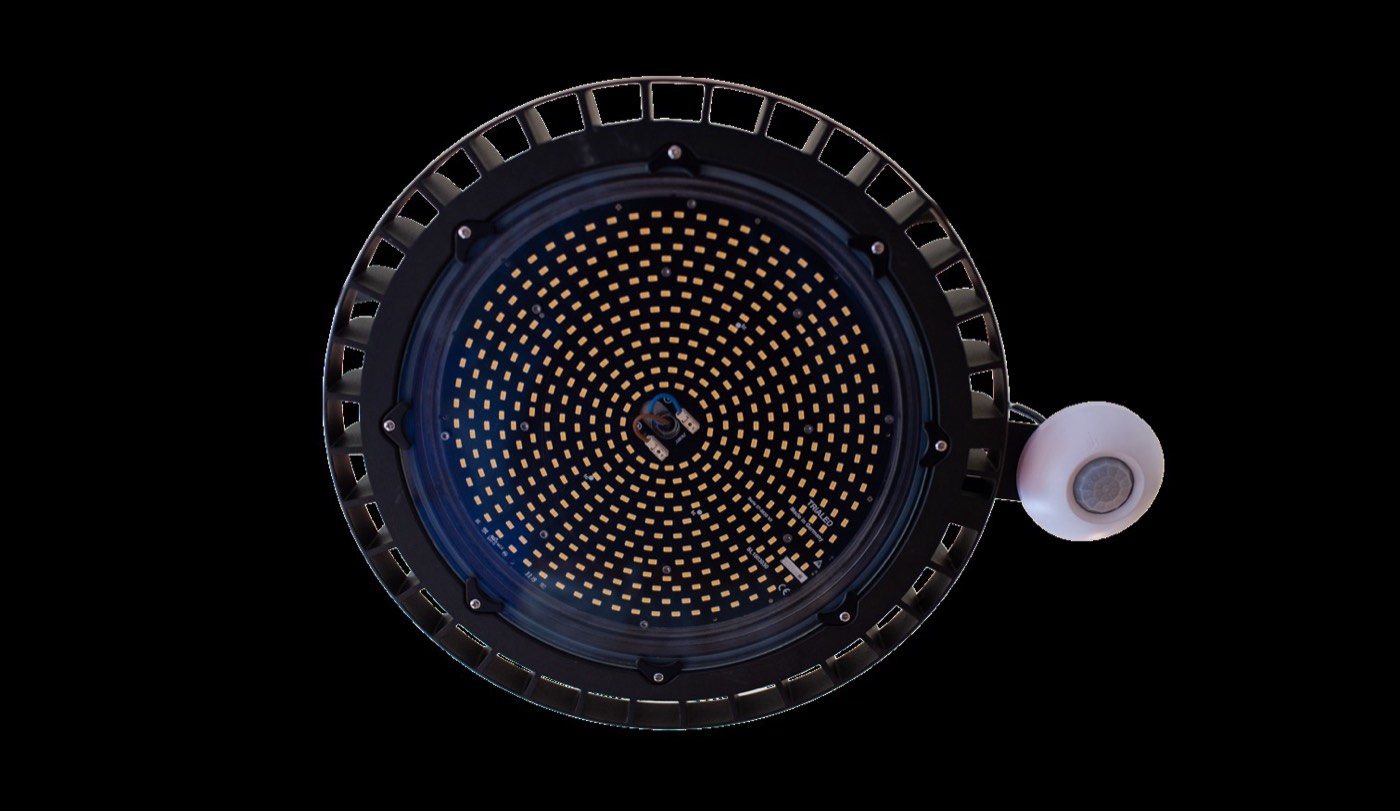
| TRiALED | Series 07 high bay: 115 to 1,200 W | Series 14 trunking: up to 157 lm/W, three optics |
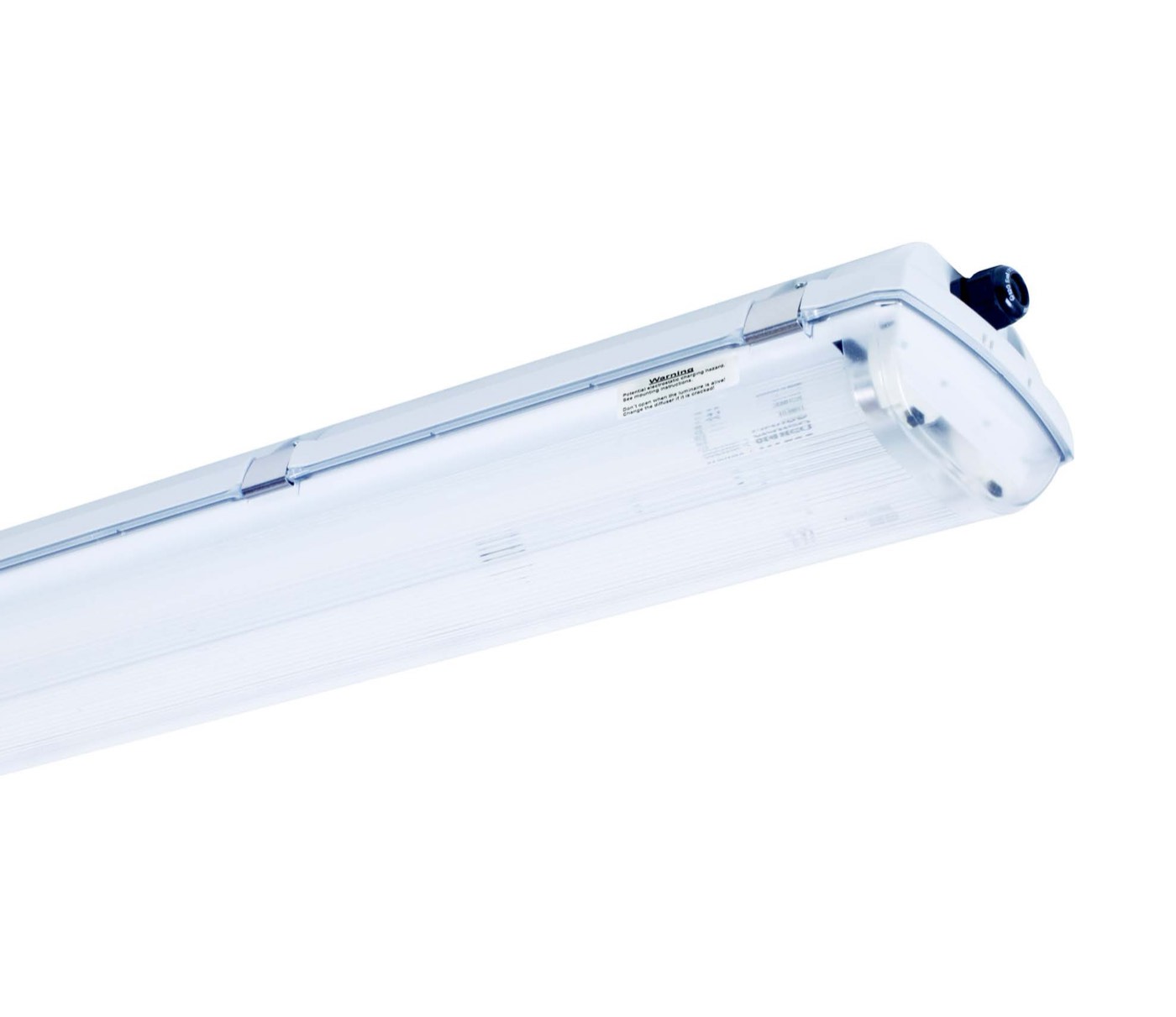
For very tall racking warehouses and long aisles, linear high bays such as the Series 10 with up to 74,732 lm are also suitable. In areas with dust, moisture or mechanical stress, rugged luminaires such as the Series 98 weatherproof luminaire or the Series 09 industrial luminaire up to IP66 and IK10 are used.
Product finderWhich luminaire suits your project?A few questions lead to a recommendation.Mounting height, optics and luminaire spacing
The higher a luminaire is mounted, the narrower its optic should generally be so that the light reaches the working plane instead of being lost on the walls. Wide-beam optics suit lower halls and open areas better.
- Spacing: As a rough guide, the spacing between luminaires should not significantly exceed the mounting height, otherwise dark zones appear. The exact layout comes from the lighting calculation.
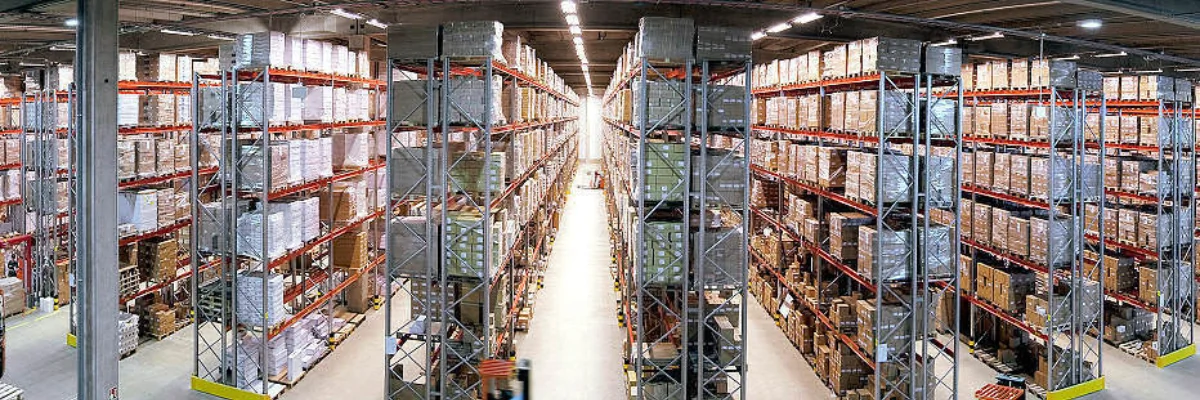
- Racking aisles: Luminaires belong above the centre of the aisle, with an optic that lights the rack fronts down to the bottom.
- Sports halls: Here you need ball-impact-resistant luminaires or protective guards. Existing fittings can often be reused with LED modules, as in the Rehberghalle in Roßdorf.
- Crane runways and obstacles: Cranes, pipework and ventilation ducts cast shadows and limit the mounting points. This belongs in the design from the start.
What does LED high bay lighting cost?
The investment depends on the number of luminaires, the mounting height, access (lifting platforms, working during operation), the controls and the disposal of the old installation. It can only be quantified responsibly after a site survey. The saving, on the other hand, can be estimated well:
100 old luminaires at 150 W each, 4,000 operating hours per year: 60,000 kWh
100 LED luminaires at 80 W each with the same usage: 32,000 kWh
Saving: 28,000 kWh – around €7,000 per year at €0.25/kWh
If sensors are added, the remaining consumption falls further. In our case studies the payback was typically between 19 and 39 months, for example 23.6 months at Carl Spaeter Südwest in Karlsruhe.
As a manufacturer with our own production in Germany we offer competitive prices – without compromising on light quality and service life. A cheap luminaire that fades after a few years is a saving in the wrong place.
LED savings calculatorWhat can your lighting save?Energy costs, CO₂ and payback in just a few minutes.Sensors: the second source of savings
Even the most efficient luminaire uses energy when nobody is there. Presence detectors switch or dim the light in zones that are not currently in use. Daylight sensors dim the light when enough daylight enters the hall through roof lights or windows.
This is particularly effective in storage aisles, ancillary areas and in shift operation with varying occupancy. The interactive simulation on our page industrial lightingshows how it works. More on this in the guide Presence detectors and light control.
Retrofitting during ongoing operation
A hall can rarely be shut down for weeks. We therefore plan the installation so that operations can continue – section by section, at night or at weekends. At the steel merchant F. Hackländer, for example, installation was only possible at weekends.
- Existing suspension points and support rails are reused wherever possible.
- Old luminaires and lamps are disposed of properly – fluorescent and discharge lamps contain mercury.
- After installation the system is commissioned, the sensors are set up and the illuminance is checked.
Checklist for your hall project
- Which activities take place where – and what illuminance do they need?
- How high are the luminaires mounted, and where are cranes, racks or obstacles?
- How many hours per day and days per week is the light on?
- Is there dust, moisture, cold or heat?
- Which areas are only used occasionally (sensors)?
- Which luminaires and wattages are installed today?
With this information we produce a lighting calculation and a reliable cost-effectiveness analysis. Get in touch or start with the Product finder.
Frequently asked questions
How many lux does a warehouse need?
For storage rooms DIN EN 12464-1 typically states 100 lx, and 300 lx for dispatch and packaging. In high-bay warehouses, 20 lx applies to unmanned aisles and 150 lx to manned aisles. What counts is the actual use and the current version of the standard.
How many LED high bays do I need?
That depends on the hall area, mounting height, required illuminance and optics. A reliable number comes out of a lighting calculation. We prepare one based on your hall dimensions and usage.
Is an LED retrofit worthwhile in a hall?
In most halls, yes – especially with long operating hours and old discharge or fluorescent lamps. In our projects the retrofit typically paid for itself within 19 to 39 months.
Can I keep my existing luminaires?
Partly. Sound fittings can often be modernised with LED modules or retrofit kits, for example from Series 05, 08 or 15. Whether that makes sense depends on the condition of the luminaires.
Which colour temperature is usual in a hall?
In production and logistics, neutral white light around 4,000 K is common. Warmer or cooler colour temperatures are possible depending on the use.