What do DIN EN 12464-1 and ASR A3.4 require?
For office workplaces, DIN EN 12464-1 and the German workplace rule ASR A3.4 apply. Typical requirements:
| Area | Typical maintained value | Glare |
|---|---|---|
| Writing, reading, data processing | 500 lx | UGR ≤ 19 |
| Meetings, conferences | 500 lx | UGR ≤ 19 |
| Technical drawing | 750 lx | UGR ≤ 16 |
| Archive, filing | 200 lx | UGR ≤ 25 |
| Corridors and circulation routes | 100 lx | – |
The values are guide values for orientation. The standard also requires sufficient brightness on walls and ceilings as well as good colour rendering (Ra ≥ 80). For your project the current versions and your risk assessment apply.
Glare and screen-based work
The UGR value (Unified Glare Rating) describes the psychological glare of a lighting installation. The lower, the less glaring. For offices, UGR ≤ 19 usually applies. For screen-based work, luminance limits are added so that luminaires are not reflected in the monitor.
- The Series 06 office luminaire achieves down to UGR ≤ 19.
- The Series 11 LED panel achieves down to UGR ≤ 14 in the low-glare version.
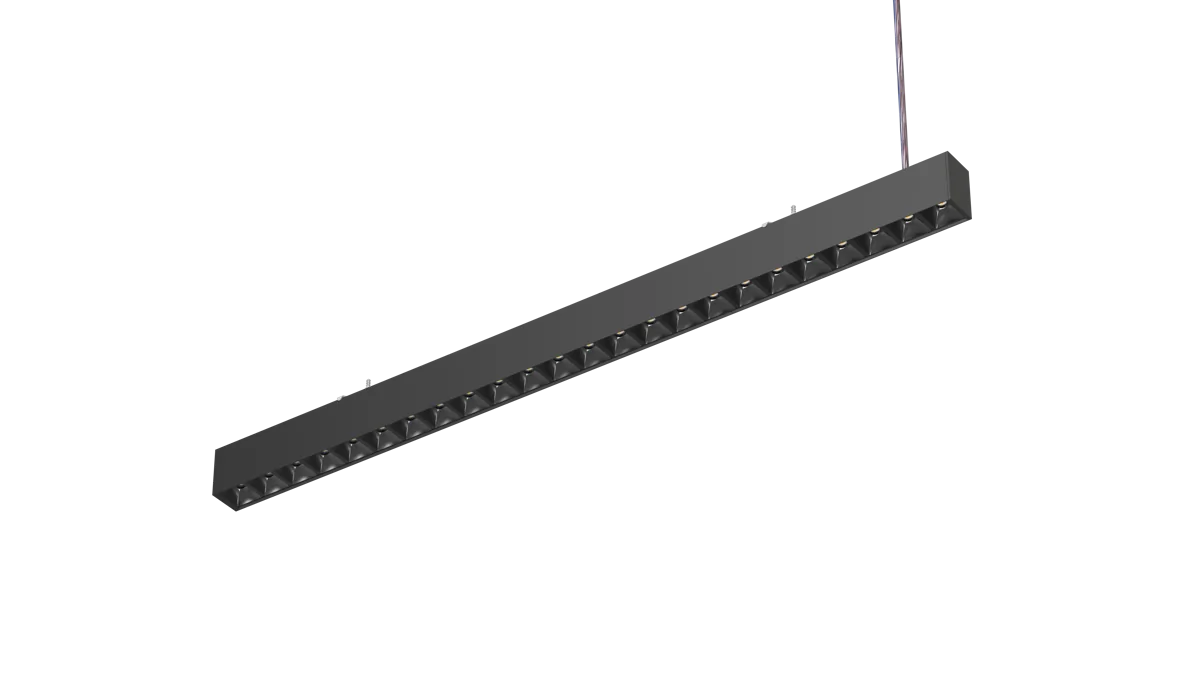
- The Series 18 Blackline combines direct and indirect light for a pleasant feel in the room.
Colour temperature and tunable white
In offices, neutral white colour temperatures around 4,000 K are common. Warm white light around 3,000 K feels more homely, for example in meeting and break areas. Luminaires with tunable white change the colour temperature during the day – cooler in the morning, warmer in the afternoon – following natural daylight. More on this in our announcement on the LED panel with tunable white.
Modular ceiling, concrete ceiling, loft: which luminaire fits?
| Ceiling | Typical solution | TRiALED |
|---|---|---|
| Suspended modular ceiling | Recessed panel | Series 11 LED panel |
| Plasterboard, recessed ceiling | Downlights | Series 17 downlight |
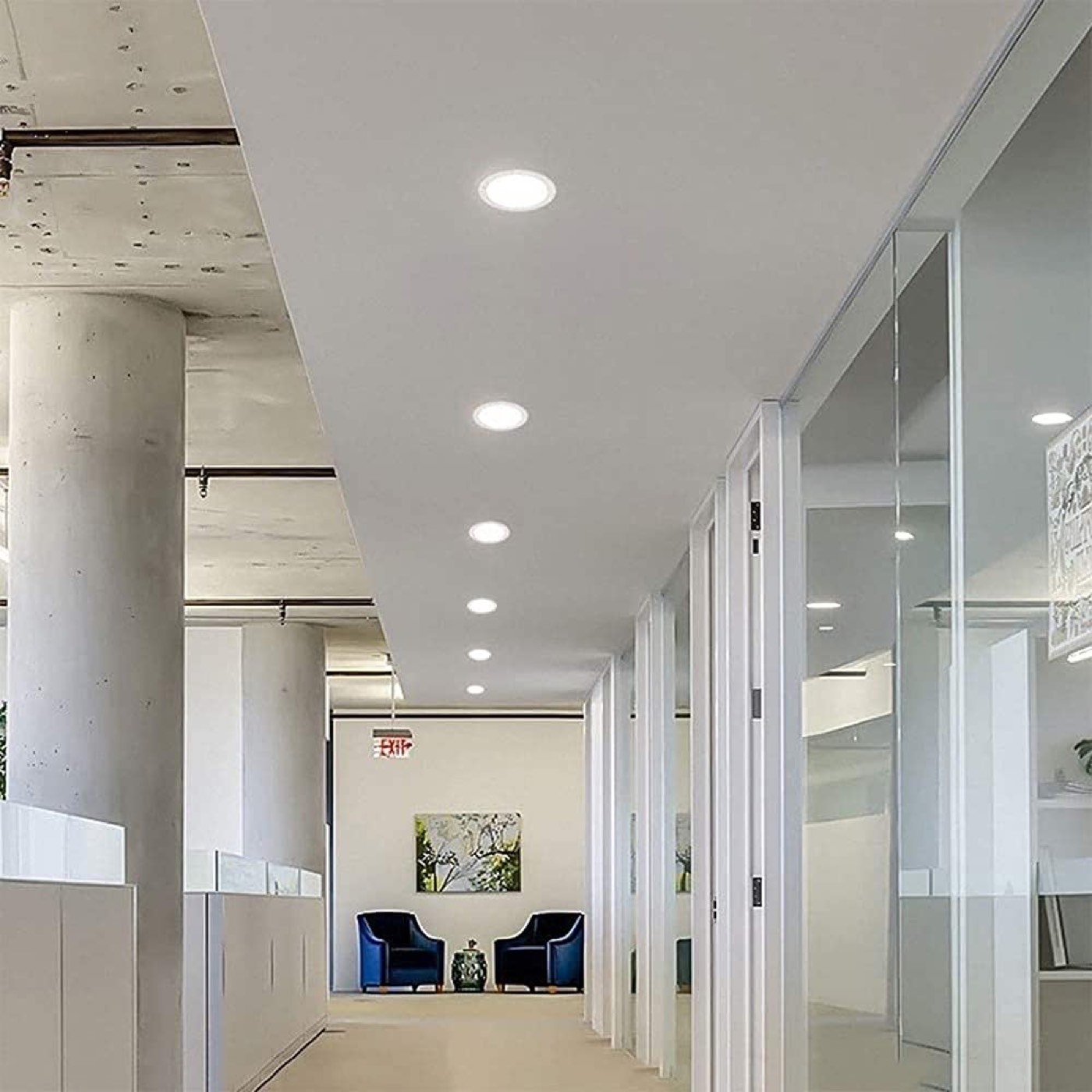
| Open concrete or loft ceiling | Suspended or surface-mounted luminaires, light lines | Series 18 Blackline, Series 06 |
| Existing T5/T8 louvre luminaires | Modernisation with LED modules | Series 05, Series 08 |
Presence detectors in the office
Individual offices, meeting rooms and kitchens often stand empty for hours, and home working and hybrid work reinforce that. Presence detectors and daylight control save particularly well here. At the modern office building the lighting energy fell by 61 %, and the sensors also supplied data for desk booking. The simulation on the page office lighting.
Light and wellbeing
Besides the values in the standards, freedom from flicker, good colour rendering and a balanced ratio of direct and indirect light matter. Whether and when LED lighting can become a strain is discussed in our post When does LED lighting start to harm health.
Frequently asked questions
How many lux does an office workplace need?
For writing, reading and screen-based work, DIN EN 12464-1 and ASR A3.4 typically state 500 lx as the maintained value in the area of the visual task.
What does UGR 19 mean?
UGR describes the psychological glare of a lighting installation. A value of no more than 19 is the requirement for typical office workplaces.
Which colour temperature is best in an office?
Neutral white light around 4,000 K is common in offices. Warm white around 3,000 K suits meeting and break areas. Tunable white can adjust the colour temperature during the day.
Are presence detectors worthwhile in an office?
Particularly in individual offices, meeting rooms and with hybrid working. In the modern office building project the lighting energy fell by 61 % with sensors.