L80B10, L90B10, L85B10: the figures explained
LEDs rarely fail suddenly. Instead their luminous flux slowly decreases over the years. Service life is therefore stated with two figures:
- L value: what percentage of the original luminous flux is still there after the stated time? L80 means at least 80 %, L90 at least 90 %.
- B value: what proportion of the LEDs may fall below the L value? B10 means no more than 10 %, B50 up to half.
| Figure | Meaning |
|---|---|
| 100.000 h L80B10 | After 100,000 hours at least 90 % of the LEDs still deliver at least 80 % of their luminous flux |
| 80.000 h L90B10 | After 80,000 hours at least 90 % of the LEDs still deliver at least 90 % of their luminous flux |
| 50.000 h L70B50 | After 50,000 hours half of the LEDs still deliver at least 70 % – a much weaker statement |
How many years are 100,000 hours?
That depends on how long the light is on in your operation. Try it out:
–years until 100,000 hours are reached
LED service life of 100,000 hours at L80B10. That means after 100,000 hours at least 90 % of the LEDs still deliver at least 80 % of their original luminous flux. Calculated with 52 operating weeks per year.
A customer recently got in touch: after ten years in service his TRiALED luminaires look like new. That is exactly what these figures are for – they make quality measurable long before you can see it.
What affects service life in practice
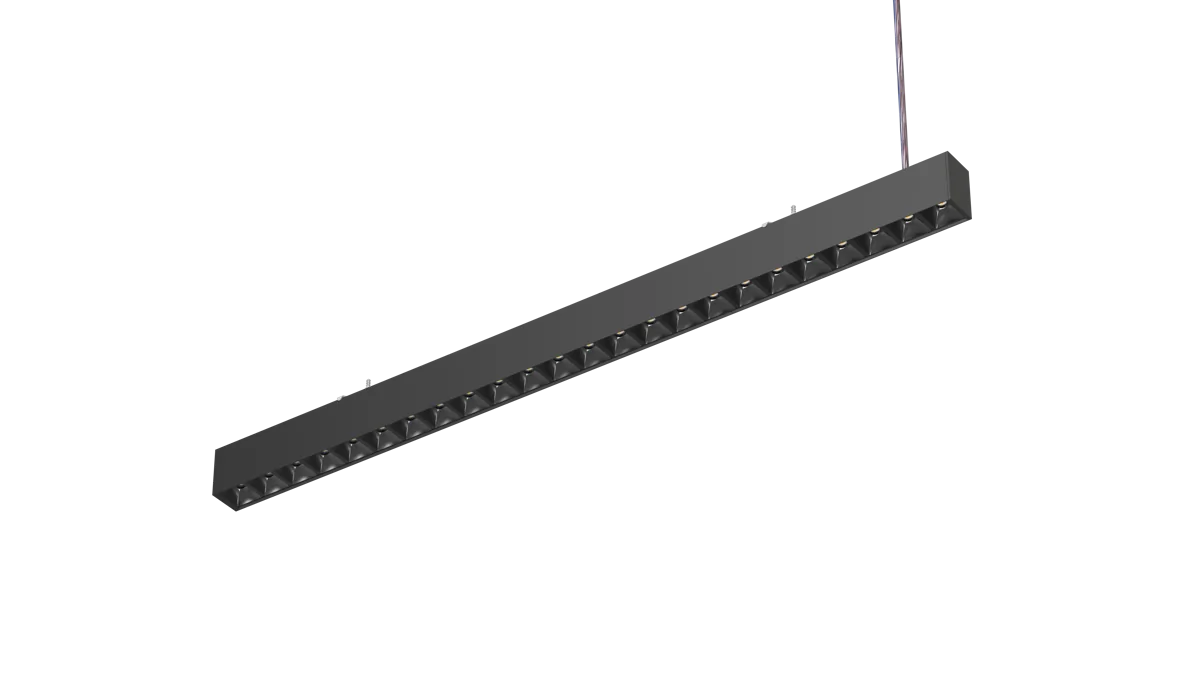
- Temperature: Heat is the LED's greatest enemy. Service life figures apply to a specific ambient temperature – on the Series 18 Blackline for example L80B10 at 35 °C. In hot halls or closed ceilings it is worth checking this figure.
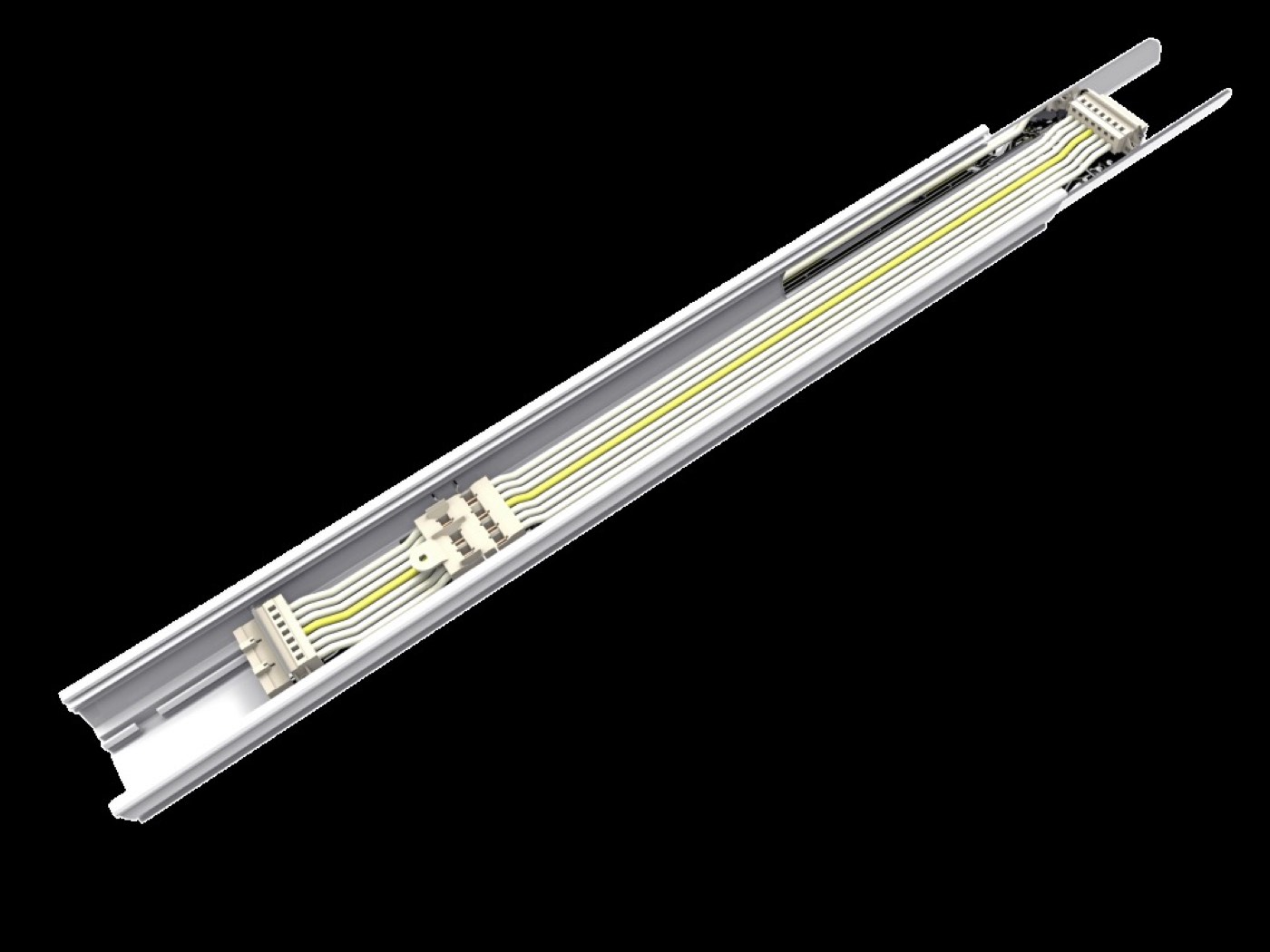
- Thermal design: solid aluminium housings, as on the Series 14 trunking system, dissipate heat and protect the LEDs.
- Operating current: LEDs that are not run at their performance limit age more slowly.
- Driver: the driver is often the component that fails first. External, replaceable drivers extend the useful life of the luminaire.
- Surges: outdoors in particular, good surge protection prevents failures – on the Series 16 street light for example 10 kV.
- Dust and moisture: a suitable protection rating prevents dirt from attacking the optic and the electronics.
How service life is determined
Nobody tests a luminaire for 100,000 hours – that would be more than eleven years of continuous operation. Instead LEDs are measured over many thousands of hours under defined conditions and the further course is extrapolated using recognised methods. Standards such as IEC 62717 and IEC 62722 define how such figures are to be stated for LED modules and luminaires.
Reputable manufacturers therefore always state the conditions their figures refer to. If the B value or the temperature is missing, ask.
Service life figures for TRiALED luminaires
| Product | Figure from the product page |
|---|---|
| Series 14 trunking | 100,000 hours, L80B10 |
| Series 18 Blackline | More than 100,000 hours, L80B10 at 35 °C |
| Series 10 linear high bay | More than 100,000 hours, L85B10 |
| Series 05 T5 LED module | More than 80,000 hours, L90B10 |
| Series 08 T8 LED module | More than 80,000 hours, L90B10 |
You will find the exact values for each version in the relevant data sheet. Blackline also comes with a warranty of at least 84 months.
Service life is not the same as warranty
Service life describes how the luminous flux develops statistically. The warranty is a contractual promise by the manufacturer for a specific period and specific conditions. The two complement each other – look at both, and at the conditions under which they apply.
ConsultationLet's talk about your project.Lighting calculation and quotation from the manufacturer.Frequently asked questions
What does L80B10 mean?
After the stated operating time at least 90 % of the LEDs still deliver at least 80 % of their original luminous flux. No more than 10 % may fall below that.
How long does an LED luminaire last?
High-quality LED luminaires are rated at 50,000 to more than 100,000 hours. At 16 operating hours on 5 days a week, 100,000 hours equal around 24 years.
Is L90B10 better than L80B10?
For the same number of hours, yes: L90 means that at least 90 % of the luminous flux is still there after that time. Always compare hours, L value, B value and temperature together, though.
Why does an LED luminaire fail anyway?
Often it is not the LED that fails but the driver, for example due to heat or voltage surges. Luminaires with replaceable drivers can then be repaired easily.