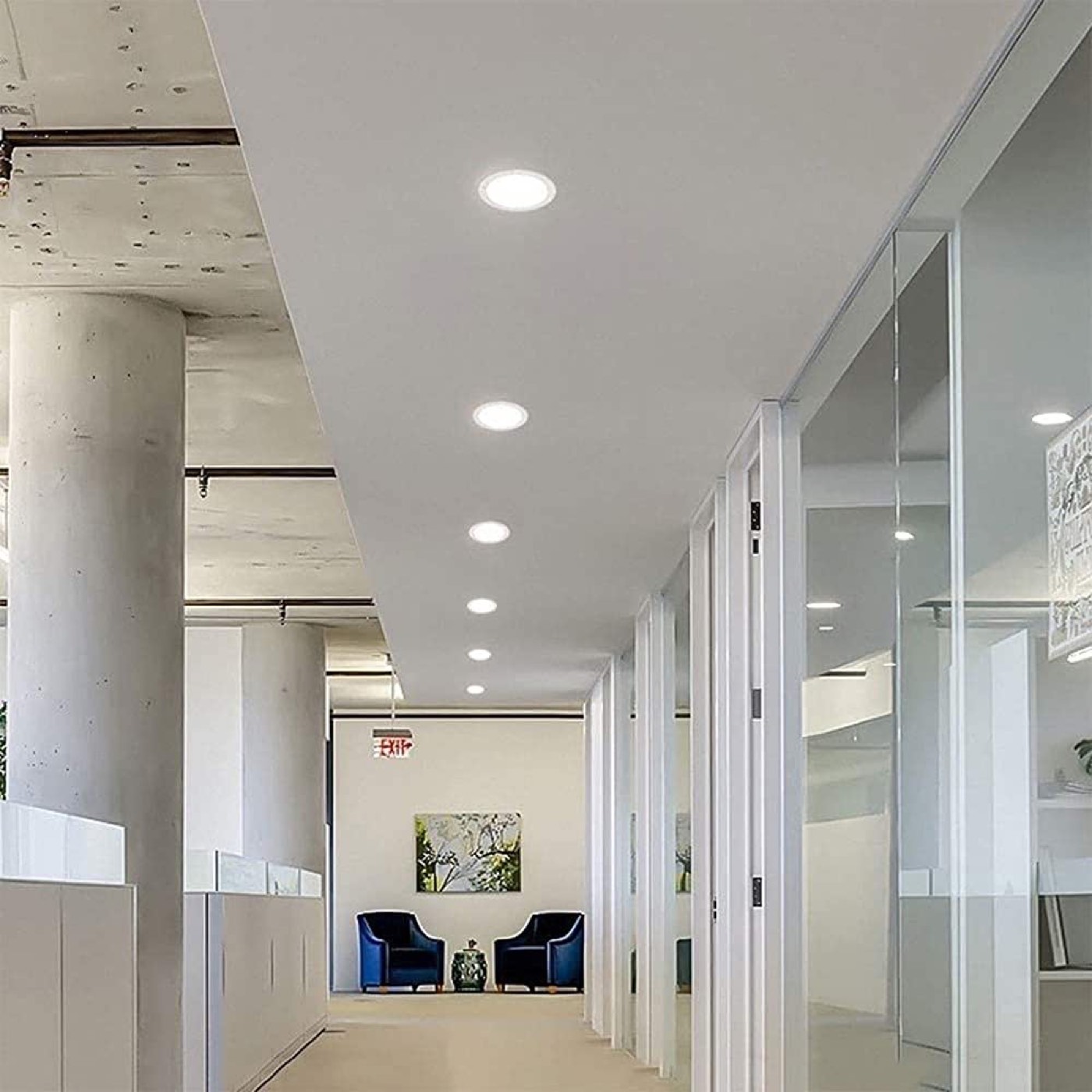
Common areas with long operating times
| Area | Typical maintained value | Solution |
|---|---|---|
| Stairwells and corridors | 100 lx | Downlights, panels, presence control |
| Underground car park | see car park lighting | Damp-proof luminaires with motion sensor |
| Office rental space | 500 lx, UGR ≤ 19 | Panels, office luminaires |
| Outdoor areas, car park | 5–20 lx | Pole-top luminaires Series 16 |
Guide values to DIN EN 12464-1 and DIN EN 12464-2. More details in the guides office lighting, Car park lighting and car park lighting.
Emergency lighting: the operator's obligations
Where safety lighting is installed or required, it must be tested regularly and the tests documented. The operator is responsible – even if they commission a service provider. With the self-testing luminaires of the Series 19 the monthly inspection round is largely no longer needed, and the test log arrives via the app. More in the guide Testing emergency lighting.
EU Buildings Directive: what owners can expect
In non-residential buildings with heating or air-conditioning systems rated above 290 kW, the EPBD requires automatic lighting controls with zoning and occupancy detection by the end of 2027, and from 70 kW by the end of 2029. Renovation obligations also apply to the worst-performing non-residential buildings. Details in the guide EPBD and lighting.
Financing through the savings
Not every conversion has to be paid for out of the budget. We offer flexible financing and contracting models with predictable costs that pay for themselves through the savings. This lowers operating costs for tenants without the owner having to pre-finance.
ConsultationLet's talk about your project.Lighting calculation and quotation from the manufacturer.From our projects
In a modern office building the energy required for lighting fell by 61 %, at Furniture store car park by 68 % – with a payback of 22 and 19 months respectively.
LED savings calculatorWhat can your lighting save?Energy costs, CO₂ and payback in just a few minutes.Frequently asked questions
Who is responsible for testing the emergency lighting in a commercial property?
The operator of the building. They can outsource the testing to a service provider, but the responsibility for ensuring it is tested and documented remains with them.
Does the EU Energy Performance of Buildings Directive also affect existing commercial property?
Yes. The requirements for building automation and automatic lighting control apply to non-residential buildings regardless of their year of construction, depending on the rated output of the heating or air-conditioning system.
Can an LED retrofit be financed without investment?
Yes, through financing and contracting models that are refinanced by the energy cost savings. We discuss the terms as part of the project.